AI does the reading. People do the curating.
GoGood uses AI where it saves a business or an editor an afternoon – reading a website, drafting a listing, pulling a season of shows off a page – and never to decide what visitors see. Every suggestion waits for a person. The result is a guide built to be the most trusted source an AI answer engine can cite.
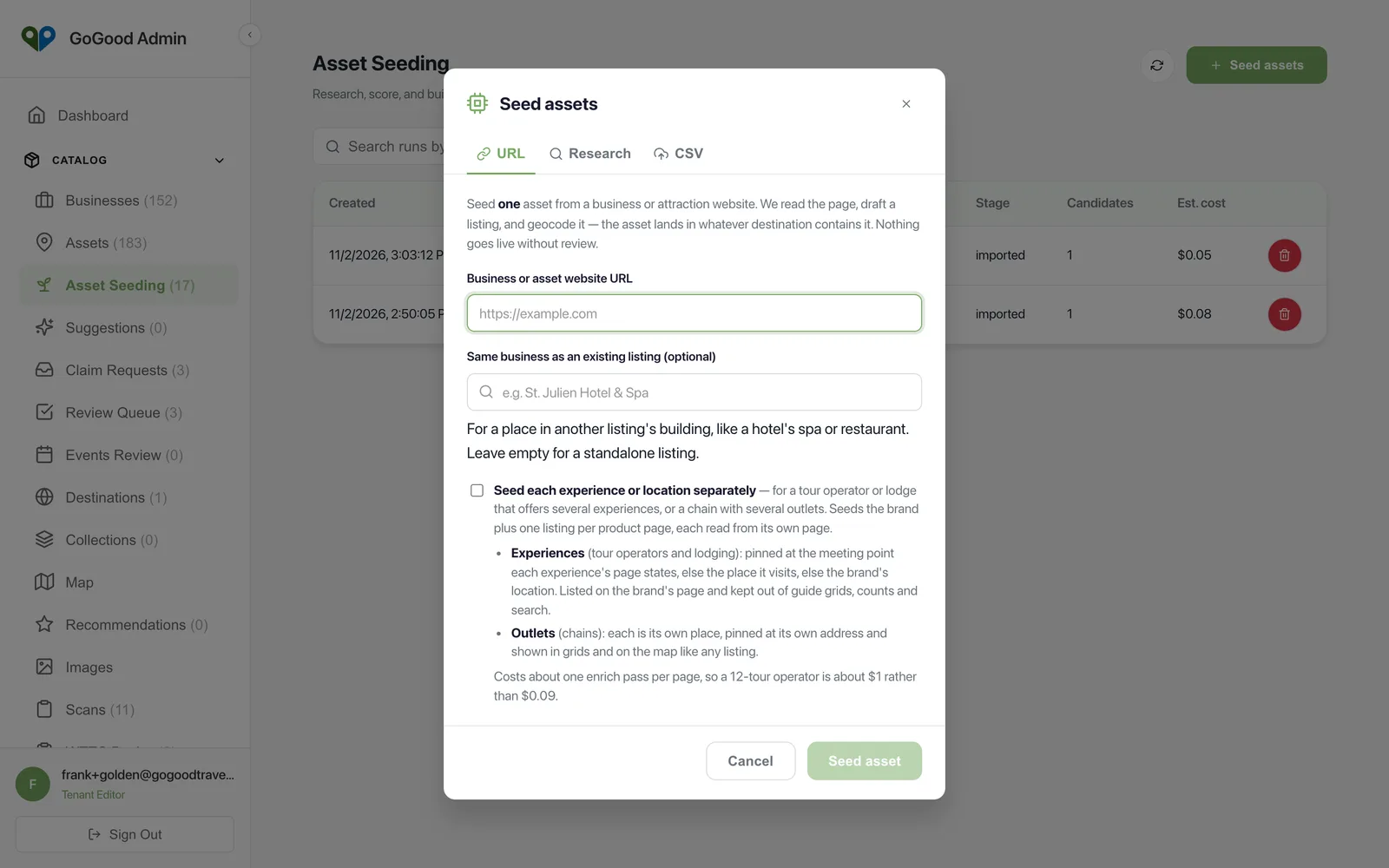
A listing from a web address
Paste a business’s website and the seeder reads it, drafts the listing – name, description, categories, hours, photos, map pin, a linked business record – and files it as a draft. Two or three minutes, pennies of compute, and nothing is published until an editor approves it.
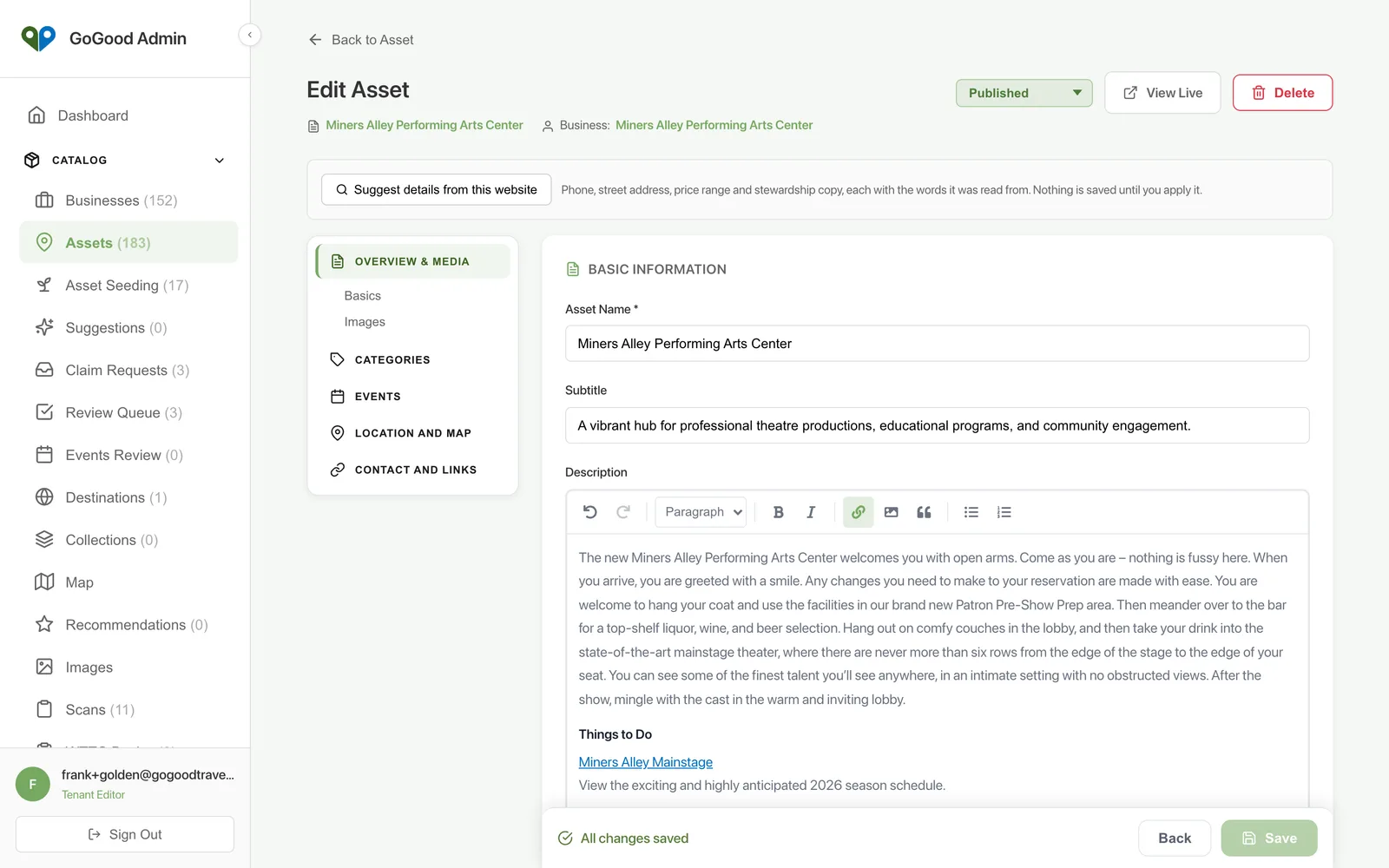
Suggestions, with the words they came from
For a listing that already exists, an editor can ask for suggestions from its website: phone, address, price range, stewardship copy. Each suggestion shows the sentence it was read from, and nothing is saved until the editor applies it.
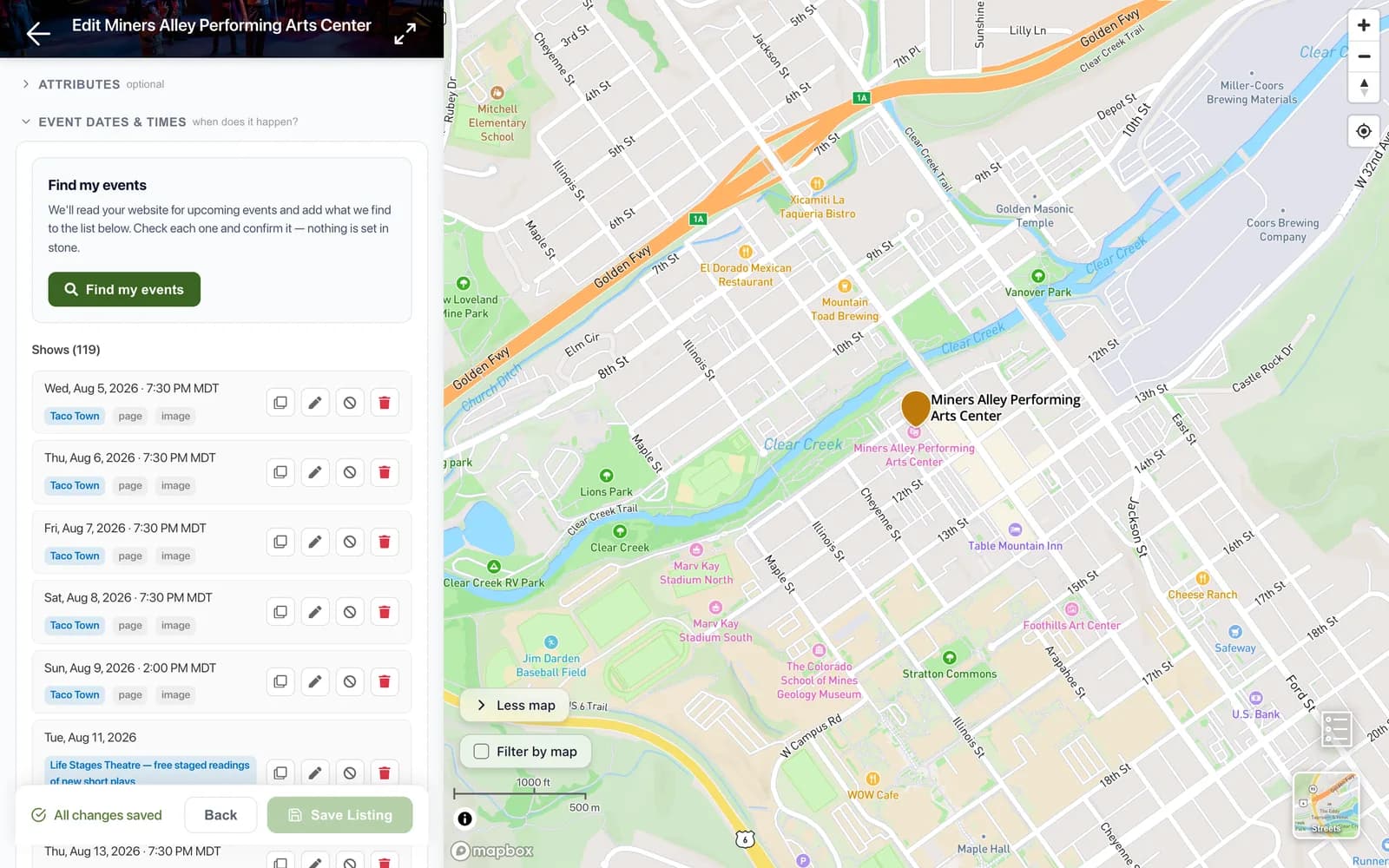
A season of shows in a minute
A venue owner points GoGood at the page that lists their events. The dates, times, titles and ticket links come back as a list to confirm, edit or discard, one by one. Where the venue runs a calendar feed, GoGood reads the feed directly and no model is involved at all.
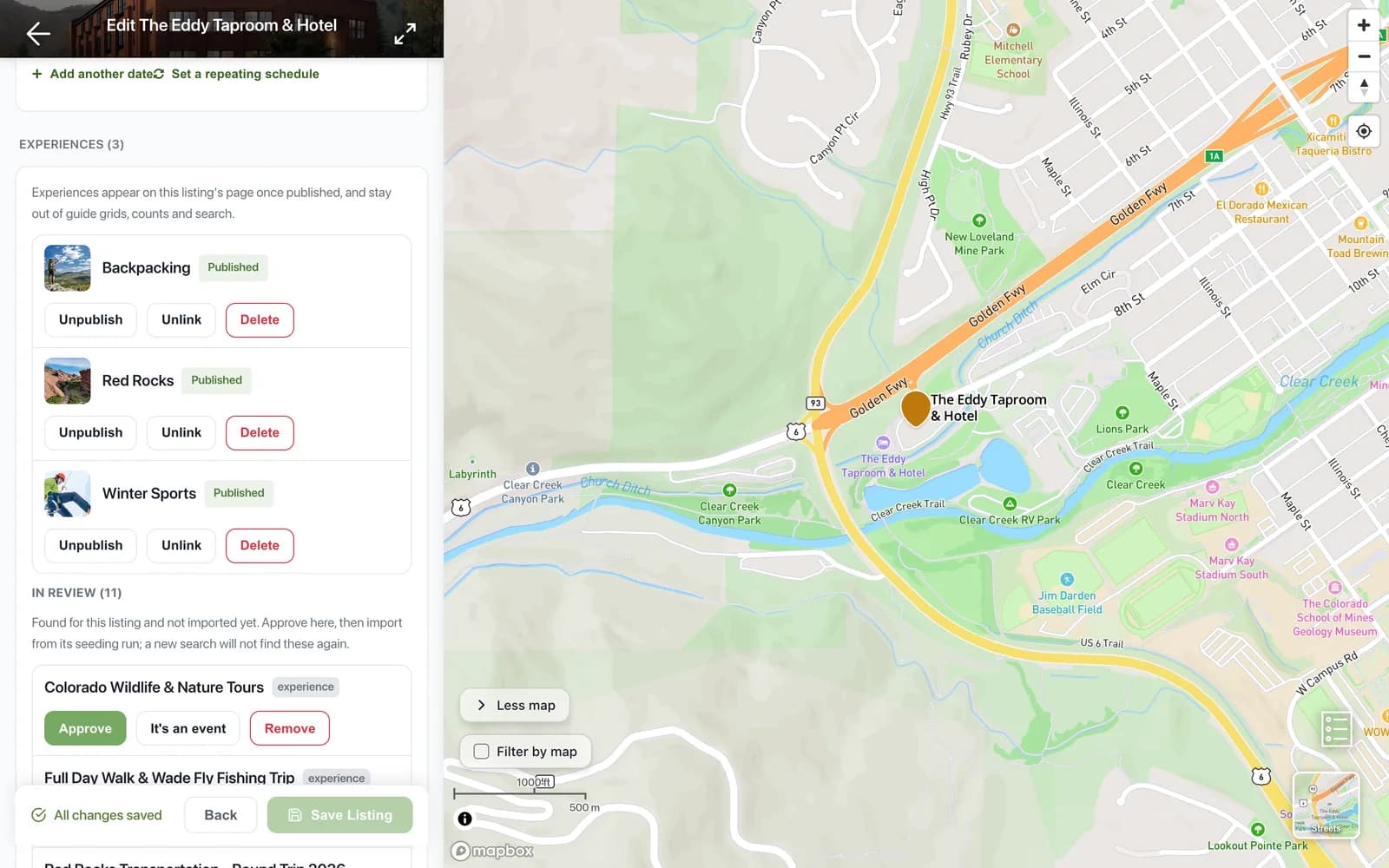
Experiences from the operator’s own pages
A hotel or outfitter pastes the page that lists its tours and packages. Each becomes a candidate experience, read from its own page, that the owner approves, reclassifies or removes before it appears on the listing.
A person signs off on everything
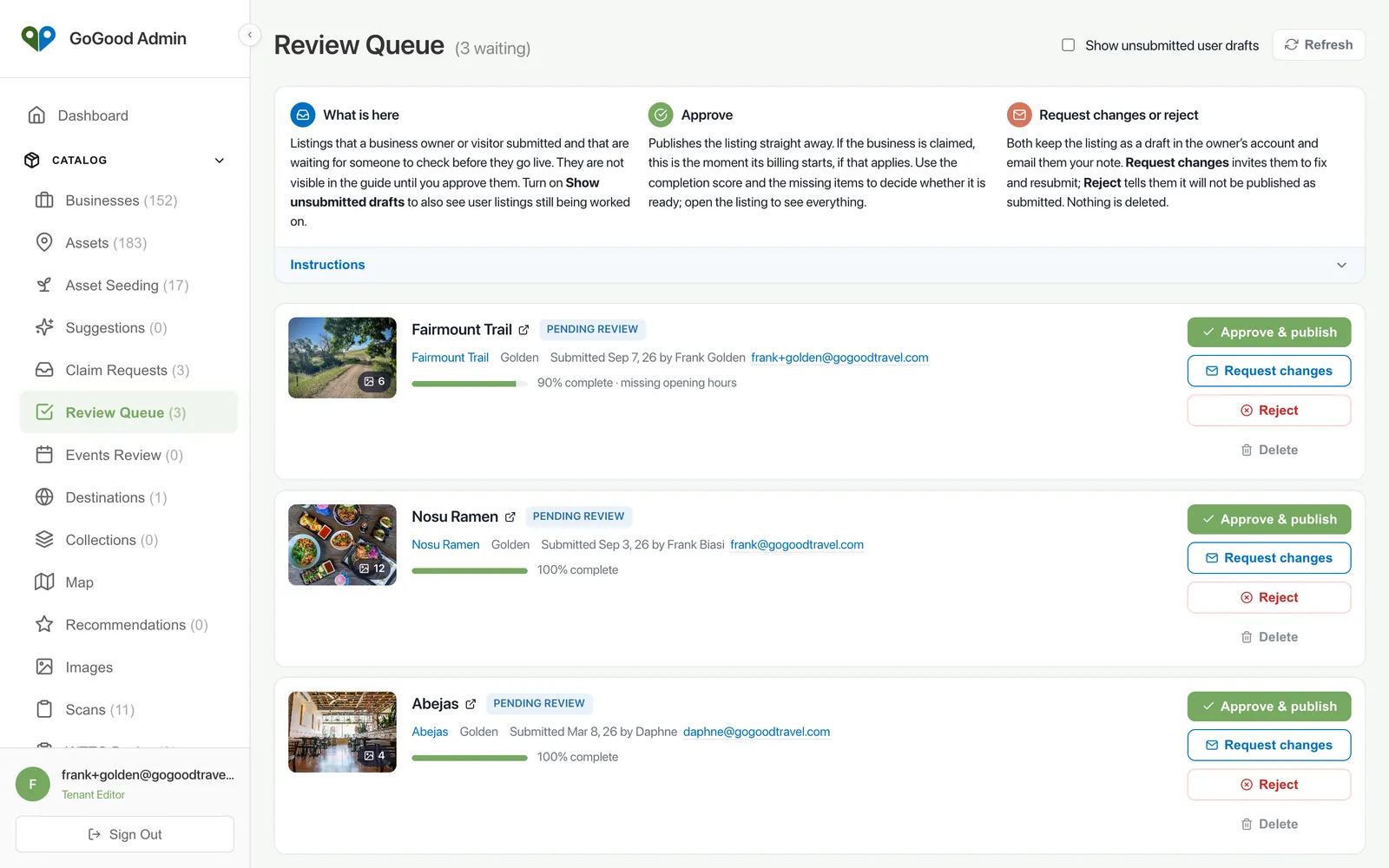
Seeded listings, owner edits, community submissions and researched events all land in review queues. An editor approves, asks for changes, or rejects. The Stewardship Score is never AI-generated: it is the business’s own self-assessment, scored by fixed rules.
Built to be cited
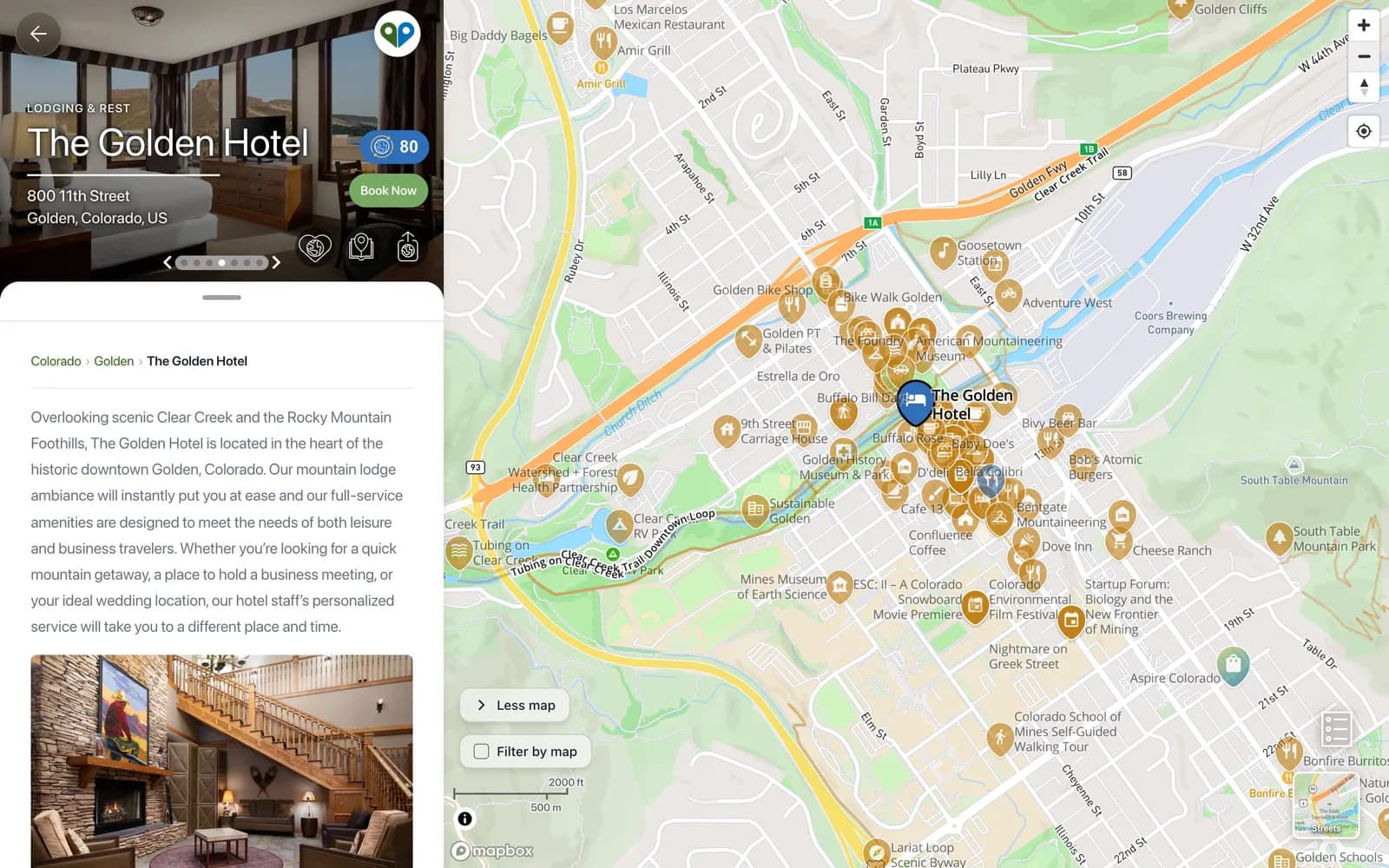
AI answer engines draw on the same pay-to-play sources that bury independent businesses, and they get things wrong. GoGood’s answer is a guide those engines can trust: curated by people, kept current by the businesses themselves, and published in the structured form machines read best. Every place page carries schema.org data – business type, address, coordinates, hours, reviews and each upcoming event – under one canonical address, in a sitemap refreshed daily, with a crawlable index of every listing in the server’s own HTML.
Where this is going
GoGood intends to be the most trusted and authoritative travel guide an AI can draw on: a structured, human-curated record of real places, their hours, their events and their self-reported stewardship practices. The events API is open to partners today; a broader data interface for answer engines is on the roadmap.
- Descriptions written for a reader, not for a keyword – the kind of text an engine quotes
- Stewardship practices stored as structured fields, always marked self-reported
- Events as a read API, so a partner can render them as native pages
- No ads, no promoted placement, so nothing in the data is paid for
Works with
Places
Curated listings with photos, hours, directions and direct links. Owners claim their listing and keep it current themselves.
Learn more →Events
An integrated events calendar: agenda and calendar views, recurring events, community submissions, and an embeddable calendar for partner sites.
Learn more →Destination admin
A CMS, a CRM and an interactive map in one place. Listings, pages, events, kiosks, embeds and analytics, scoped to your destination.
Learn more →Start with a call
AI drafts, finds and suggests; people decide what goes live. And every listing is structured so AI answer engines can find it and cite it.
Start with a call