
Alamosa National Wildlife Refuge
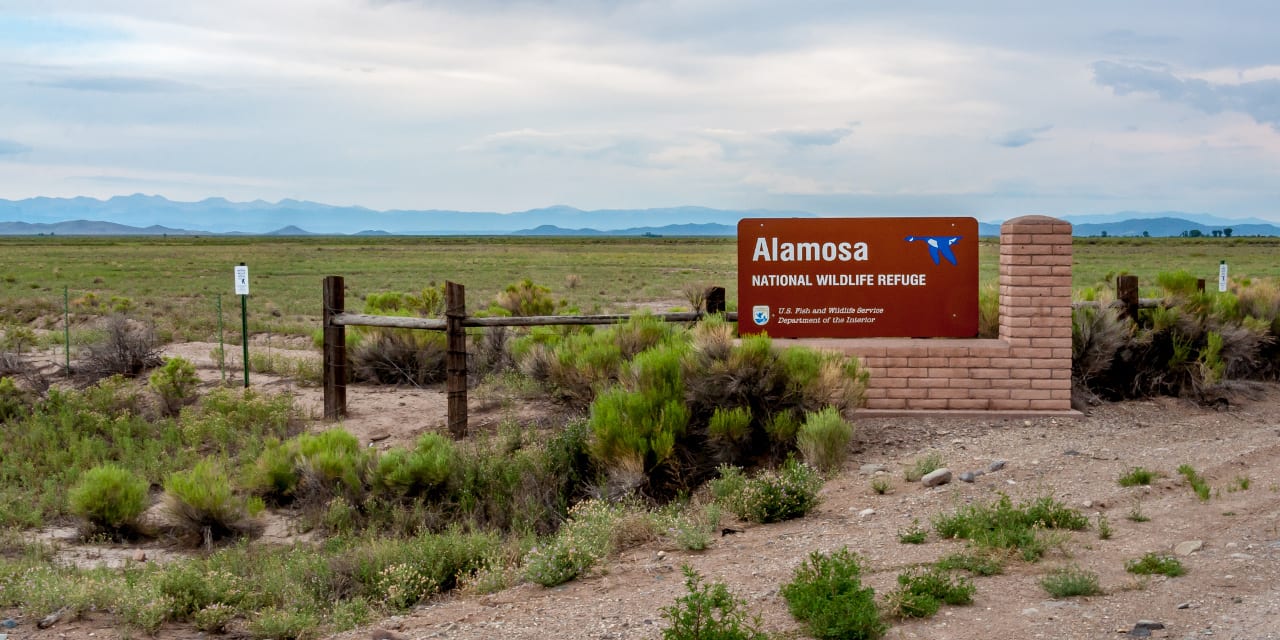
Alamosa National Wildlife Refuge was established in 1963 to provide food, cover, and breeding habitat for migratory birds and resident wildlife. The Refuge conserves and enhances the mixtures of wetland and desert habitats found in the area to accomplish these goals. Habitat management tools used on the Refuge include water and wetland management, weed control, haying, grazing, and prescribed fire.
The 12,026 acre Refuge is located at the south end of the San Luis Valley, a high mountain basin in south-central Colorado. It’s one of three national wildlife refuges in the Valley that provide crucial feeding, resting, and breeding habitat for over 200 bird species and other wildlife. The San Luis Valley, sitting at 7,800 feet, extends over 100 miles from north to south and 50 miles from east to west. Three mountain ranges surround it – the Sangre de Christo to the east, the San Juan to the west, and the Saguache to the north. At sunset, the high peaks of the Sangre de Christo take on the blood red glow which inspired the Spanish explorers to name the range “Blood of Christ.”
The surrounding mountains feed the arid valley with precious surface water and replenish an underground reservoir. The mountain snow melt and artesian wells provide needed water to the agricultural community and to the rivers, creeks, and wetlands that thread across the valley floor. The Refuge lies within the Rio Grande floodplain and consists of wet meadows, old river oxbows, riparian corridors, and dry uplands. These diverse habitats support a multitude of songbirds, water birds, waterfowl, raptors, mule deer, beavers, and coyotes. The west side of the Refuge borders the Rio Grande, long considered to be the life blood of the San Luis Valley. Water from the Rio Grande maintain these important habitats.
Things to Do
Public Viewing Areas
-
“Wildlife Drive” located east of the Comfort Station & Kiosk is partially wet with some waterfowl use in the southern and eastern portions of the unit. Mule deer and Elk have also been seen hanging out along the fringes of the wetland.
-
“Rio Grande Walking Trail” located at the Visitor Center is open from Sept 1st – April 15th. Currently the trail is open and hosting a good number of migrating songbirds and waterfowl. Other birds such as Great Blue Herons, Swainson’s Hawks, and American Kestrels are very frequent in this area. A few Sandhill Cranes have also been heard flying overhead.
-
“Malm Trail” located west of the Alamosa Refuge and accessed through the City of Alamosa property, has good numbers of migrating songbirds and some waterfowl utilizing the river along the refuge.
-
“Bluff Overlook Pullout” located on the far east side of the refuge along County Rd 116, overlooks a full “Bluff Slough” and adjoining wetlands. The southern areas of the refuge are unfortunately dry.
-
“Bluff Nature Trail” located on the southern portion of the refuge, off the Bluff Overlook Drive, is open but the area is dry.
Plan Your Visit
Hours of Operation The Refuge is open one hour before sunrise to one hour after sunset for Refuge permitted activities.
Getting Here Directions to the Refuge and Visitor Center -- From the junction of Hwy 17 and 160, drive east on HWY 160 for about 3 miles to El Rancho Lane. Turn right onto El Rancho and drive about 3/4 of a mile to the Refuge HQ Office and Vistor Contact Station. The visitor contact station is open intermittently when staff and volunteers are available.
Know Before You Go When you plan for a trip to the Refuge, wear sturdy shoes for hiking and dress for the weather. Bringing water, food, binoculars, field guides, a hat, sunscreen, insect repellent, and anything else that might make the outdoor experience more enjoyable.
For more information, call us at 719-589-4021 or by email at alamosa@fws.gov.